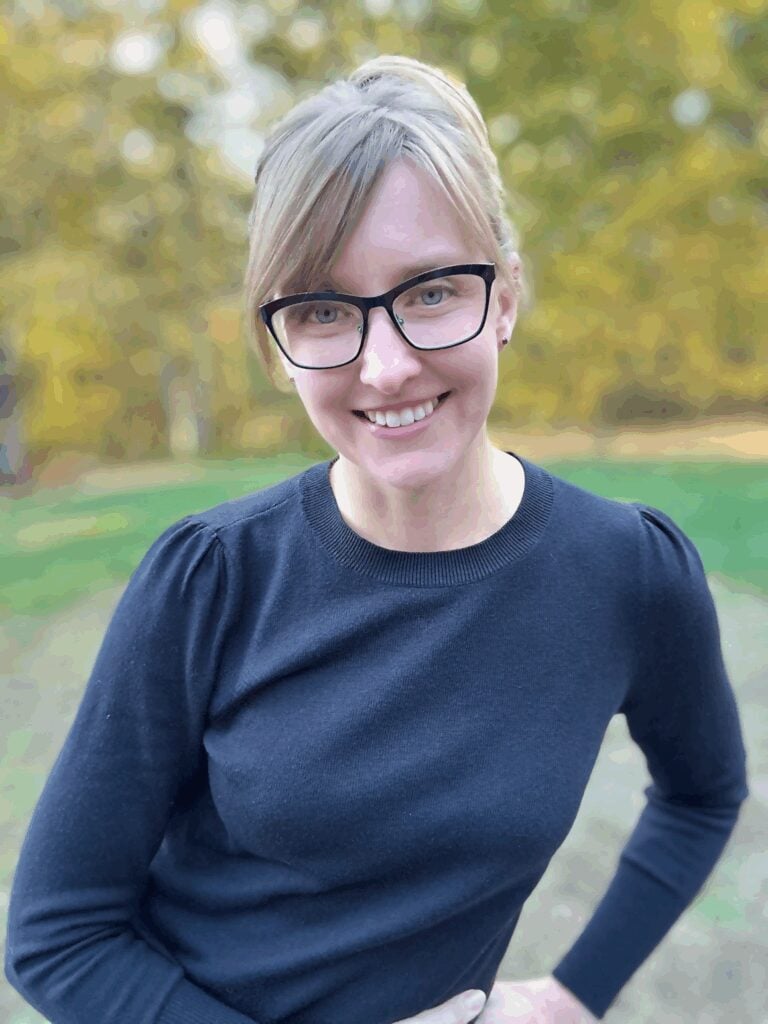
Target ALS is proud to announce four newly funded research projects through the In Vivo Target Validation Program, which accelerates drug discovery by supporting proof-of-concept studies in ALS-relevant mouse models. Among the 2025 grantees is Dr. Sarah Knutson of ROME Therapeutics, whose pioneering work explores a bold new therapeutic strategy: targeting LINE-1 activity to halt neuroinflammation in ALS.
A Novel Therapeutic Approach
At the heart of ROME’s project is the idea that LINE-1 retrotransposons, genetic elements normally silent in healthy cells, become overactive in ALS. This activity may fuel inflammation and DNA damage in neurons.
“We’re developing inhibitors of LINE-1 reverse transcriptase, the enzyme that drives this activity,” said Dr. Knutson. “Our compounds are designed to cross the blood-brain barrier and directly target the source of neuroinflammation.”
By blocking LINE-1 activity, her project aims to reduce disease markers in ALS models and restore healthier cellular function, potentially advancing an entirely new class of therapies.
Why Target Validation Matters
The In Vivo Target Validation Program provides researchers like Dr. Knutson with the opportunity to answer critical questions early in the development process, such as “Can experimental therapies engage their target in the brain?” and “Does that engagement meaningfully alter disease biology?”
“We’re understanding how and when LINE-1 activation can play a role in this disease,” Dr. Knutson explained. “Using our inhibitors in this model can bridge the gap between preclinical models and predicting a clinical response.”
Conducted in partnership with the contract research organization Biospective, these studies generate standardized, rigorous results that are valuable not only to the grantees but also to the broader ALS research community.
Driving Toward Patient Impact
Beyond the science, Dr. Knutson emphasized how following this novel biological connection with new perspectives is an opportunity to develop a medicine, which drives her work.
“ALS is a devastating and fast progressing disease. It’s important to remember the reality of patients living with ALS so we as scientists have that human connection with why we do drug discovery,” she said.
Her perspective underscores the power of collaboration. “What excites me is how the ALS field is very collaborative and grateful for the research efforts in this indication., It’s refreshing to see consortiums across academia, nonprofits, and biotech come together with similar ideas and diverse capabilities.”
Looking Ahead
With Target ALS support, ROME Therapeutics will test whether LINE-1 inhibitors can meaningfully impact ALS progression in mouse models. Positive results could provide the foundation for clinical development, helping bring a novel treatment approach one step closer to patients.
The In Vivo Target Validation Program exemplifies Target ALS’s commitment to advancing promising therapies toward the clinic, ensuring that bold ideas like Knutson’s have the opportunity to transform ALS research, and ultimately, patient outcomes.
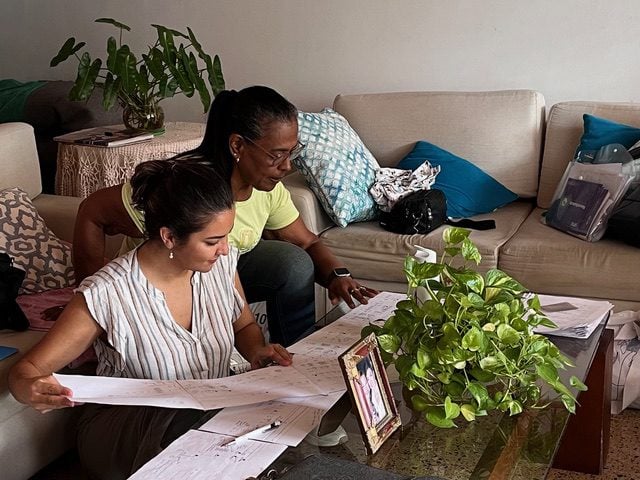
For decades, Colombia has been at the center of some of the most important genetic discoveries in neurodegenerative disease. First, with the world’s largest family affected by early-onset Alzheimer’s. Now, Dr. Juliana Acosta-Uribe and her collaborators are building on that legacy, turning to ALS and frontotemporal dementia (FTD) to answer some of the field’s most pressing questions.
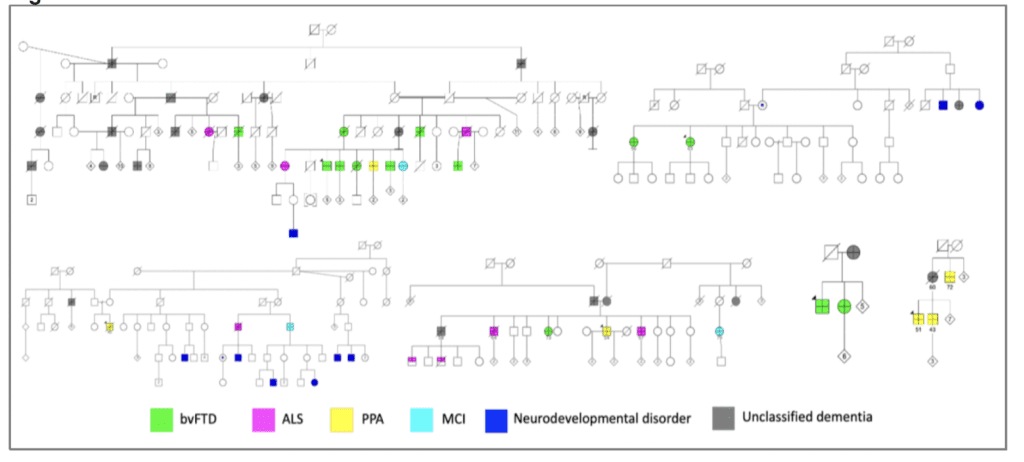
At the heart of Dr. Acosta-Uribe’s project is a striking genetic discovery: several large Colombian families carrying the TARDBP Ile383Val variant, a mutation that disrupts TDP-43, one of the most consistent hallmarks of ALS pathology. Incredibly, within this group, some members develop ALS, others show different forms of FTD, and still others remain unaffected, even into their 80s.
“Even siblings with the exact same mutation present with very different clinical phenotypes,” Dr. Acosta-Uribe explained. “That variability tells us there are other genetic, molecular, or environmental factors at play and we want to find out what they are.”
Building on Alzheimer’s Success
Dr. Acosta-Uribe’s work is rooted in her success in Alzheimer’s genetics, where she helped map how founder effects and ancestral diversity in Colombian populations have made rare mutations more visible to science. That experience gives her optimism: if large family cohorts could reveal Alzheimer’s secrets, perhaps they can do the same for ALS and FTD.
Find her research paper on this here.
The Project: From Families to Therapies
Dr. Acosta-Uribe’s research spans multiple levels:
- Phenotyping and Longitudinal Studies: Following carriers of pathogenic variants in TARDBP, both symptomatic and presymptomatic, to track the natural history of disease.
- Genomics: Using short- and long-read sequencing to search for genetic modifiers that explain why some carriers develop ALS, others FTD, and some remain healthy.
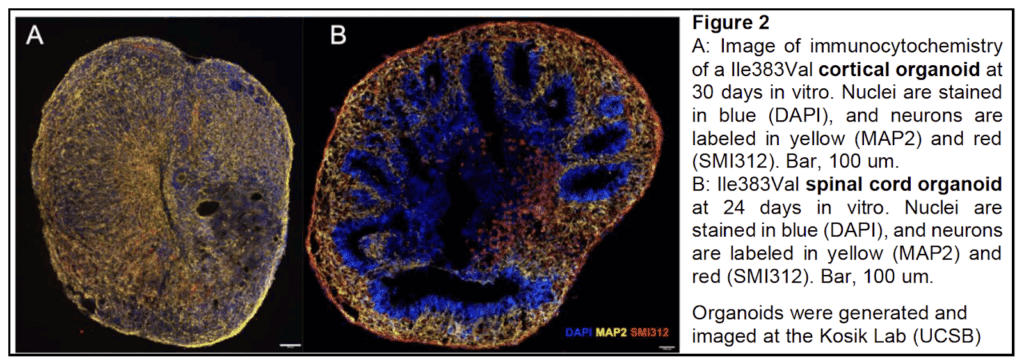
- Patient-Derived Models: Developing brain and spinal cord organoids from family members’ cells to replicate disease in the lab to understand the cellular networks that are disrupted by these mutations and test therapeutic approaches.
- Postmortem Studies: Working with families who potentially may consent to brain donations in the future, allowing researchers to probe the roots of disease expression at the cellular level.
This integrative approach aims to connect the dots, from a person’s DNA, to how their brain and spinal cord change, to how therapies might intervene.
Synergy Across the Americas
Dr. Acosta-Uribe’s project is deeply collaborative. She works with Dr. Martha Peña’s team in Bogotá, part of the Target ALS Global Natural History Study, ensuring Colombian patients are represented in global biomarker efforts. She also partners with the Grupo de Neurociencias de Antioquia (GNA) in Medellín, where decades of expertise and a brain bank of over 500 samples provide critical infrastructure for discovery.
Why It Matters for All ALS
While the study focuses on familial neurodegeneration, the insights can extend to sporadic cases. By studying a single mutation expressed in many different ways, researchers can untangle the broader biology of TDP-43; the protein that misbehaves in nearly all ALS patients.
Dr. Acosta-Uribe sees her work as a way to accelerate therapeutic development: “If we can identify protective factors or genetic modifiers in these families, those discoveries could inform biomarkers, drug targets, and clinical trial design for the entire ALS/FTD community.”
A Message to the ALS Community
Dr. Acosta-Uribe is passionate about representation in science. “When we study only European populations, we miss part of the picture,” she told us. “By including diverse ancestries, we can uncover unique genetic insights that benefit everyone. It’s like seeing a die from different angles: you need different perspectives in order to get the full picture.”
Her project is just beginning, but the vision is clear: a future where the unique genetic story of Colombian families helps unlock treatments that change the trajectory of ALS and FTD worldwide.
At Target ALS, we’re proud to support Dr. Juliana Acosta-Uribe’s work; an effort that blends science, collaboration, and community into a powerful engine for progress.